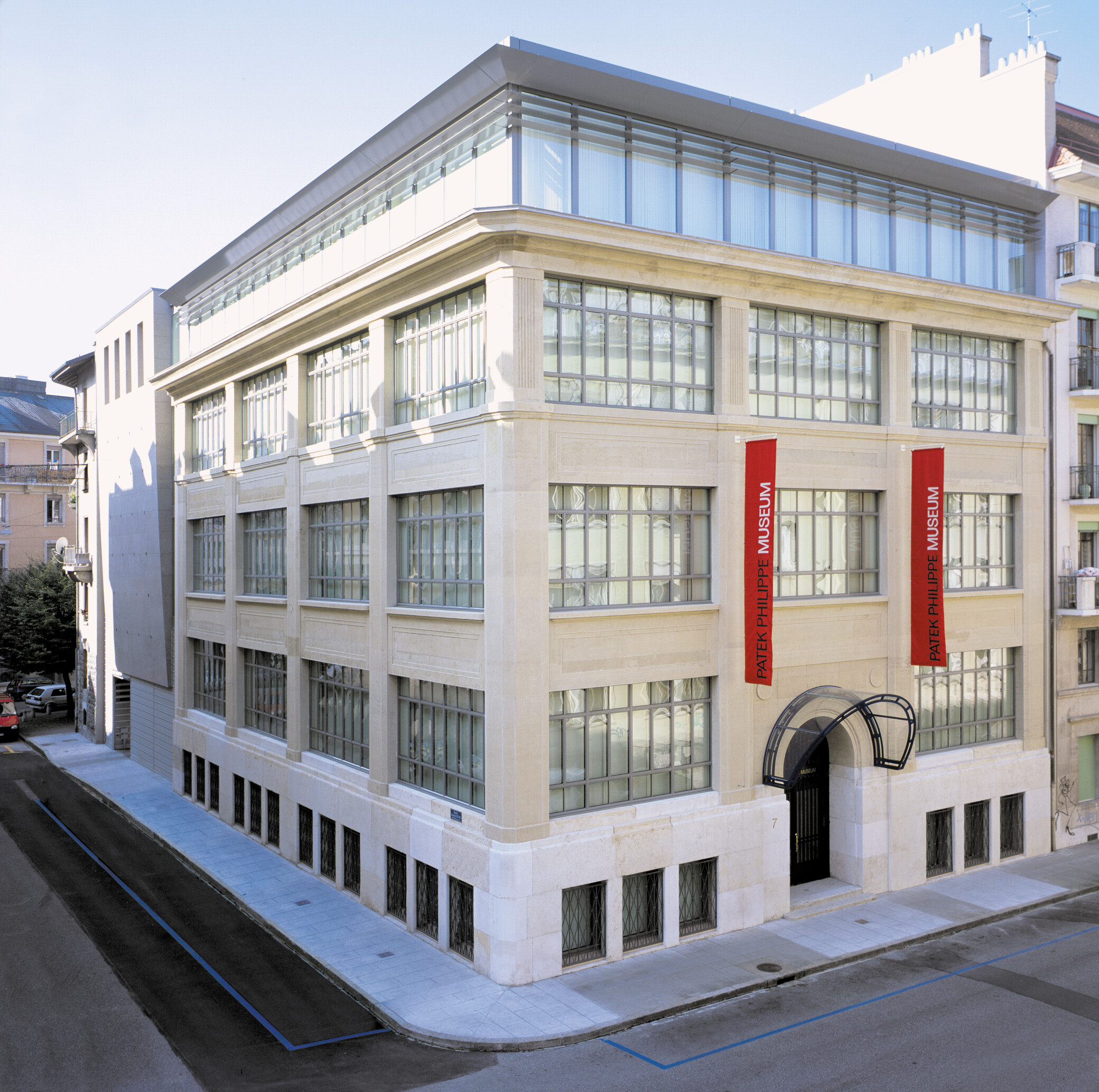
Few institutions in Geneva capture the soul of traditional watchmaking quite like the Patek Philippe Museum. Situated on Rue des Vieux-Grenadiers, this vault of mechanical history has spent a quarter of a century safeguarding five centuries of European horological art. Following its inauguration on 9 November 2001, the museum is marking its 25th anniversary with a major special exhibition that opened to the public on 13 November 2026.
Running through 31 October 2027, the showcase is far more than a chronological retrospective. It serves as a deeply personal tribute to the museum’s visionary founder, Philippe Stern, who passed away earlier this year.
A Founder’s Vision on the Ground Floor
Philippe Stern, former President and Honorary President of Patek Philippe, began collecting timepieces at an early age. While his initial focus rested on complicated Patek Philippe watches, his curiosity soon expanded to historic pieces from the 16th century onwards and the delicate Geneva speciality of miniature enamel painting. His goal was never merely private accumulation; he wanted to share his passion with the wider public and preserve Geneva’s watchmaking heritage for future generations.
On the ground floor, the anniversary exhibition honours Stern by bringing together, for the very first time, the eleven specific timepieces from the collection that inspired him most. Originally unveiled in his 2004 book, The Values of a Family Watch Company, these eleven watches represent the ten core values that define the family-owned manufacture.
The selection reads like a roll call of horological milestones:
Calibre 89 (1989): Created for the manufacture’s 150th anniversary, this 1,100-gram marvel held the title of the world’s most complicated timepiece from 1989 to 2015. Featuring 33 complications and 1,728 components, including a patented Easter date display, it embodies the value of Independence.
The Henri Stern Watch (1943): A unique rose-gold perpetual calendar wristwatch (Ref. 1527) inherited by Philippe from his father, Henri, who received it from his own father. It stands for Emotion and generational continuity.
James Ward Packard Astronomical Pocket Watch (1927): Commissioned by the American automotive pioneer, this double-faced watch features ten complications and a reverse dial charting 500 gold stars exactly as they appeared over Packard’s birthplace of Warren, Ohio.
Venus Binding the Wings of Love (circa 1815–1820): A pair of mirror-image, heart-shaped watches crafted for the Chinese market by Piguet & Meylan, combining quarter-repeating mechanisms, music, automata, and champlevé enamel.
10 Days Tourbillon (2003): The Ref. 5101 in platinum, which solved the technical puzzle of housing both a tourbillon escapement and a ten-day power reserve inside an Art Deco rectangular case.
The Crow and the Fox (1956–1958): A clever prototype by Louis Cottier inspired by Jean de la Fontaine’s fable, where pressing a button prompts a mechanical fox and crow to indicate the hours and minutes on demand.


Alongside these sit The Cross-Shaped Watch (circa 1670) representing the early Geneva Fabrique, Suzanne Rohr’s 1969 enamel masterpiece The Mother and the Child, the 1997 Chronometer with Minute-Repeater (Ref. 5029) marking the Plan-les-Ouates inauguration, the flared-lug Eiffel Tower (Ref. 2441) from 1949, and the unique 1940 World Time Chronograph (Ref. 1415-1 HU) crafted with a pulsometer for Geneva physician Dr P. Schmidt.
Rare New Acquisitions Across the Upper Floors
Beyond the founder’s tribute, the museum has enriched its permanent displays on the first and second floors with two extraordinary recent acquisitions.
In the Patek Philippe Collection on the first floor, visitors can examine two double-movement pocket watches originally commissioned by American industrialist John Motley Morehead III. Sold in 1922 and 1925 respectively, each gold pocket watch houses two entirely independent movements operated by a single winding crown and shared stem. The larger 54.75 mm example pairs a time-only calibre with a second movement boasting a split-seconds chronograph and minute repeater, displaying two separate time indications on a single dial.
Upstairs in the Antique Collection on the second floor, the spotlight falls on the Cremsdorff pendant watch (circa 1650). Featuring a mechanical movement by Parisian master watchmaker Jehan Cremsdorff, its solid gold case is coated in pale turquoise enamel and set with diamonds. The enamel depicts the three heavenly virtues of Temperance, Charity, and Hope, adapted from engravings by Abraham Bosse.
It is precisely this style of 17th-century turquoise enamel work that sparked the lifelong passion of current Patek Philippe President Thierry Stern. Recalling his childhood, Stern noted that discovering antique enamelled watches inside a red velvet-lined drawer in his father’s Rue du Rhône office at age six or seven was the exact moment he knew he wanted to dedicate his life to watchmaking.


Celebrating 50 Years of the Nautilus
Rounding out the visit on the third floor is a dedicated retrospective celebrating the 50th anniversary of the Nautilus. Drawing directly from the manufacture’s historical archives, the display traces five decades of sporty elegance alongside the exclusive four-model limited series released for the golden jubilee. While the main anniversary exhibition runs until October 2027, this special Nautilus retrospective remains on view until early 2027.
Planning Your Visit
Whether you are a seasoned collector or simply curious about mechanical artistry, the exhibition offers a rare glimpse into the private tastes that shaped modern horology.
Exhibition Dates: 13 November 2026 to 31 October 2027
Location: Patek Philippe Museum, Rue des Vieux-Grenadiers 7, 1205 Geneva, Switzerland
Opening Hours: Tuesday to Friday (2:00 pm to 6:00 pm), Saturday (10:00 am to 6:00 pm), Sunday (2:00 pm to 6:00 pm). Closed Mondays and public holidays.
Further Information: Visit the official Patek Philippe Museum website for ticketing and visitor details.
Images: Patek Philippe