As luxury real estate pivots from sheer scale to environmental stewardship, developers and buyers alike are placing a premium on untouched natural landscapes over sprawling footprints.
For decades, luxury real estate was largely a story of more: more square footage, more amenities, more privacy. Today, some of the most ambitious developments are making a different calculation, placing greater value on what they choose not to build.
Across resort destinations, developers are setting aside significant portions of valuable land for conservation, gardens and open space. For buyers, the landscape is becoming part of the luxury proposition itself, whether that means protected coastline outside the front door, acres of native habitat or gardens woven throughout a community.
The shift reflects a broader change in how affluent consumers think about sustainability. According to HBX Group’s 2026 Travel Trends Report, 84 per cent of global travellers consider sustainability essential. In real estate, that conversation is moving beyond energy efficiency and other measures within the home to the larger question of how a place is developed in the first place.
Less Building, More Landscape
The clearest examples can be found in resort markets, where pristine surroundings have always been part of the appeal.
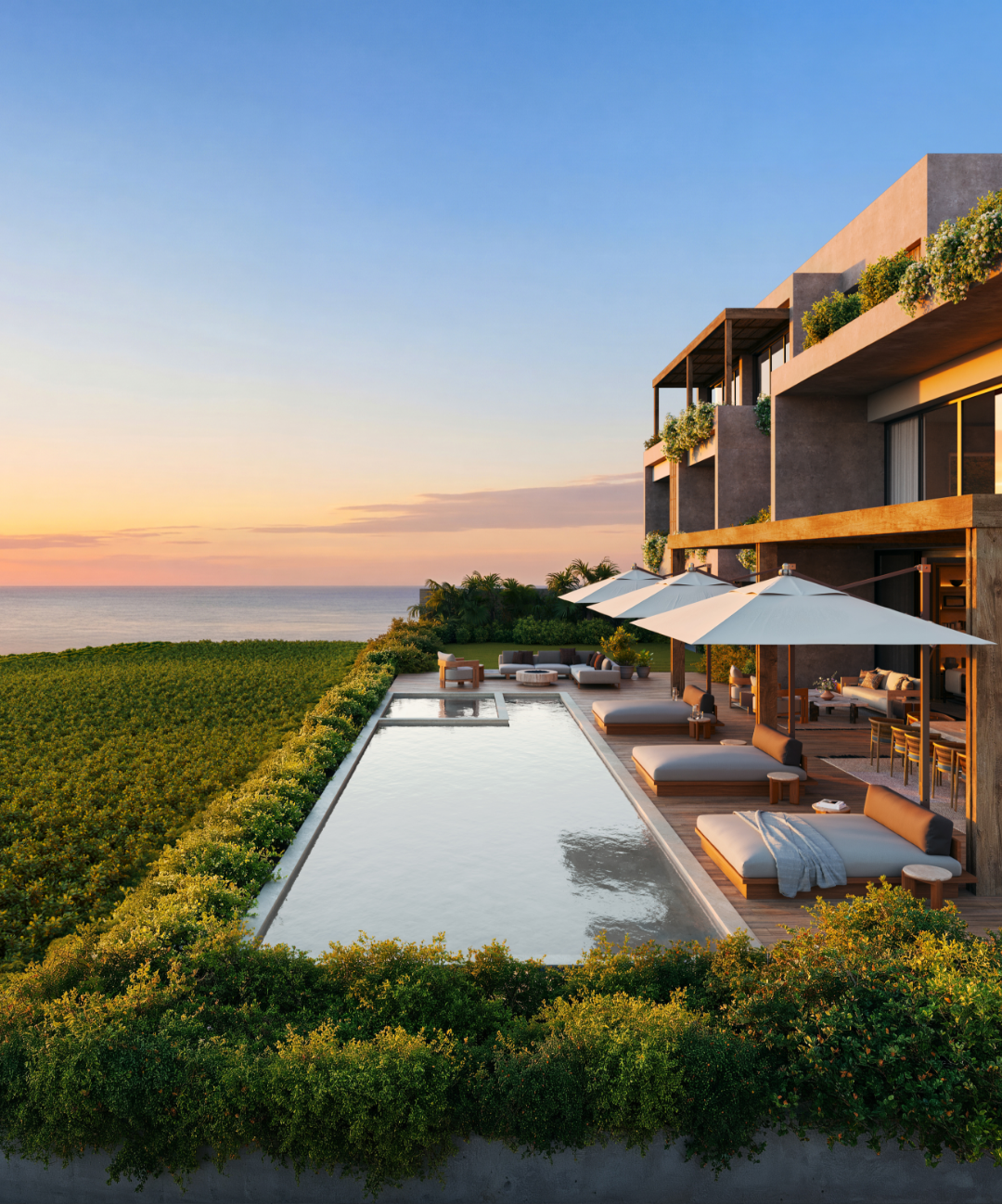
At Mandarin Oriental Residences Kanai, Riviera Maya, only 9 per cent of the 680-acre site will ever be built upon. The remaining 91 per cent is dedicated to conservation, preserving the jungle, mangroves and dune-lined coastline surrounding its 49 private oceanfront residences and 120 hotel suites.


Images: Mandarin Oriental Residences Kanai, Riviera Maya
On Costa Rica’s Papagayo Peninsula, The Residences at The St. Regis Papagayo Resort is taking a similarly restrained approach, with 75 per cent of the coastal property remaining protected green space. Native landscaping, locally sourced materials and energy-efficient design further root the residences in their surroundings.

Image: The Residences at The St. Regis Papagayo Resort
In Montenegro, Luštica Bay brings the idea to an entirely different scale. Ninety per cent of the 1,700-acre site is dedicated to nature preservation, alongside three and a half miles of protected coastline.

Image: Luštica Bay
There are also destinations that demonstrate what this approach looks like over time. Mayakoba, the 595-acre resort community in Mexico’s Riviera Maya, was developed around its existing mangroves, lagoons and native ecosystems. Nearly two decades of biodiversity monitoring and environmental stewardship have allowed the destination to grow without losing the natural environment that helped define it.


Images: RLH Properties
In Crete, Elounda Hills takes a somewhat different approach. Rather than relying on a single conservation figure, its 138-acre master plan weaves green space, native landscaping and botanical gardens throughout the community, with a 700-metre waterfront promenade designed to make the landscape part of everyday life.


Images: Elounda Hills
These projects vary widely in scale and setting, but the underlying idea is similar: luxury is no longer measured solely by how much can be built on a piece of land. Increasingly, there is value in leaving room for nature.
In a market long defined by more, perhaps the greater luxury is space left alone.
“luxury is no longer measured solely by how much can be built on a piece of land”.