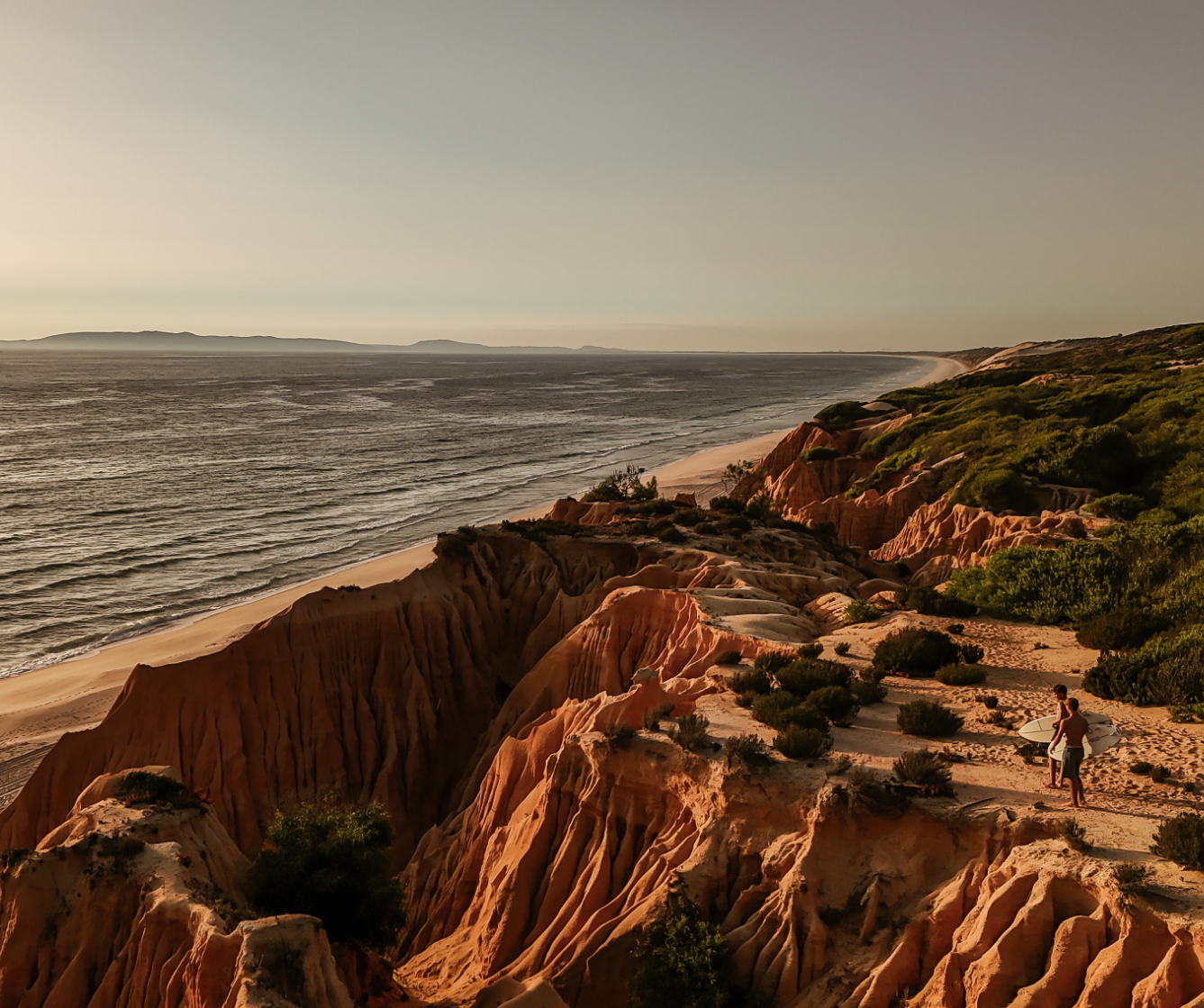
Portugal’s most coveted coastline has spent two decades perfecting the art of not trying too hard. Now, between its two best-known villages, a 400-hectare landscape of pine forest, dunes and freshwater lakes is testing whether the region can grow without losing what made people come in the first place.
The custodian
João Cabaça remembers an Alentejo before Comporta became shorthand for a particular kind of European summer.
The co-founder and chief executive of Lisbon-based VIC Properties grew up in the region at a time when families such as his drove further south to the Algarve for holidays. Pinheirinho had meanwhile spent some two decades moving through Portugal’s exacting coastal planning system before VIC acquired the estate during the pandemic.
“I get asked what the hardest part of this job is,” says Cabaça. “It’s deciding what will never be built.”
Less than five per cent of Pinheirinho will be developed. Rather than a single resort, the masterplan is being formed as a collection of neighbourhoods stitched through the existing landscape. Private plots sit alongside turnkey houses by Brazilian and Portuguese practices including Jacobsen Arquitetura, Studio Arthur Casas, Rodrigo Machado Soares and SCCS Arquitectos. Pin, a separate neighbourhood of 138 apartments, occupies higher ground overlooking the landscape.
The early buyers offer an interesting clue as to whom this new version of the coast is for. More than 70 per cent of Pinheirinho’s original 120 plots have been sold, with Portuguese purchasers accounting for the majority.
On a coastline increasingly discussed through the prism of international wealth, the domestic appetite is perhaps the more telling story.


A new anchor
The most significant arrival comes in late 2028. Six Senses Comporta will introduce a 70-key hotel and 58 branded residences designed by renowned London-NY architecture practice Michaelis Boyd, with Barão’s Topiaris responsible for the landscape.
The residences respond to three distinct conditions already present on the site. Sand Dune villas sit closer to the Atlantic landscape; Forest homes disappear further beneath the canopy; Lake residences face the water. Materials including cork, terracotta and timber reference the vernacular without attempting to reproduce it wholesale. Barão is particularly resistant to landscaping that looks landscaped.
Planting follows species and patterns already found here. Cork oak and pine are grouped as they occur naturally rather than arranged for effect. Masonry daybeds reference old houses in the region. At the hotel, an organic garden is intended to become less of an amenity than a crossroads: somewhere guests pass through on their way to dinner, collect ingredients or stop for tea.
There will, inevitably, be the apparatus expected of Six Senses: spa treatments, hydrotherapy, yoga, an Alchemy Bar and the brand’s considerable wellness programme. But the more convincing gestures are often the quieter ones.
A shaded path connects the residences with the hotel before continuing into the forest. The idea, according to those behind the project, is that the resort should feel threaded into Pinheirinho rather than placed on top of it.
Residences currently start at €2.76 million.


Beyond August
Perhaps the greater test is whether this corner of the coast can escape its summer calendar.
The wider Pinheirinho estate is being designed for year-round use. An 18-hole course by Portuguese golf architect Jorge Santana da Silva sits within the masterplan, outside the Six Senses resort itself, with a clubhouse by Jacobsen Arquitetura. There are riding facilities, trails through the pines and plans for restaurants and shops.
Then there is the journey.
Lisbon Airport is about 90 minutes away by road, but arriving from the north offers a better introduction. Drive to Setúbal and the ferry crosses the Sado estuary towards Tróia in around 25 minutes. On a good day there may be dolphins beside the boat. Beyond them, the landscape flattens into rice fields before the road turns south towards the pines.
It’s tempting to describe every new pocket of this coastline as “the next Comporta”. That rather misses the point.
Comporta worked because, for a time at least, it did not seem particularly interested in becoming anything. Melides developed its appeal differently again. Pinheirinho’s opportunity lies not in reproducing either village, but in allowing the territory between them to acquire its own identity.
Twenty years after the outside world discovered this part of Portugal, restraint remains its most valuable commodity.
Every expert involved in the Pinheirinho has practiced restraint, patience and letting the land dictate what comes next. The success of what comes next may depend on whether everyone else is prepared to keep listening.
“I get asked what the hardest part of this job is. It’s deciding what will never be built”.
João Cabaça, Co-founder and Chief Executive of VIC Properties
Images: VIC Properties