As Mexico shifts from a regional resort hub into a global capital of ultra-luxury, RLH Properties CEO Luis Duran reveals why true luxury is defined by conservation, generational community, and an authentically Mexican soul.
Ultra-luxury travel is shifting from brief escapes to long-term sanctuaries, and Mexico is redefining its standing on the global stage. Leading this transformation is RLH Properties, a proudly Mexican company pioneering low-density, master-planned ecosystems that seamlessly integrate world-class hospitality, branded residences, and natural conservation.
In this exclusive interview, Luis Duran shares how iconic destinations like Mayakoba, Mandarina, and Cabo del Sol are elevating service-driven homeownership with partners like Rosewood and One&Only. From harmonising competing luxury brands within a single landscape to protecting vulnerable biomes through long-term stewardship, RLH reveals the vision, strategy, and distinctively Mexican heritage driving the next chapter of ultra-luxury living.

Mexico has evolved from a regional resort market into a global ultra-luxury hub. What macro trends are driving this shift, and how is RLH defining this next chapter?
Mexico has always had extraordinary natural beauty, culture and hospitality. What has changed is both the definition of luxury and Mexico’s place within it. Travellers and homeowners are increasingly looking beyond the traditional resort model. They want greater privacy, exceptional service, meaningful experiences, extraordinary nature and, perhaps most importantly, a genuine connection to place.
At the same time, we are seeing a shift from simply visiting a destination to becoming part of it. Families want places they can return to year after year, where they can build traditions and create memories across generations.
At RLH, we believe Mexico has earned a place among the world’s great luxury destinations. And as a proudly Mexican company, we want to play a role in defining what that means. Not by replicating what has been successful elsewhere, but by creating a distinctly Mexican expression of world-class luxury.
For us, the next chapter is about complete destinations rather than individual properties. Hospitality, residences, wellness, gastronomy, golf, recreation, culture and nature all become part of an integrated experience. Mayakoba established an extraordinary model for this approach, while Mandarina and Cabo del Sol represent very different expressions of how it can continue to evolve.
RLH focuses strictly on AAA assets in prime locations. What specific criteria determine if a landscape can support a flagship destination like Mandarina, Mayakoba, or Cabo del Sol?
We don’t begin with a hotel and look for somewhere to put it. We begin with an extraordinary piece of land and ask what belongs there.
The starting point is always whether the land
possesses something genuinely distinctive that cannot be replicated elsewhere. It might be the coastline, the topography, an extraordinary ecosystem, the views, or simply a sense of privacy and seclusion that is increasingly difficult to find.
Then we think very long term. Can we create a world-class hospitality and residential destination while preserving the qualities that made the land extraordinary in the first place?
The best architecture responds to the landscape rather than competing with it. At Mandarina, Mayakoba and Cabo del Sol, the environments are completely different, and the destinations should be as well. Ultimately, we want to create places that could only exist exactly where they are.
Buyer expectations for branded residences have matured rapidly. How is RLH elevating the concept of service-driven homeownership with partners like One&Only and Rosewood?
Today’s buyers expect much more than a beautiful residence carrying the name of a recognised hospitality brand. They are looking for a complete way of life: exceptional service, privacy, community and access to experiences that extend far beyond the walls of their home.
Our approach is to make ownership an extension of the destination itself. At Mandarina, for example, that can mean wellness, extraordinary dining, equestrian experiences, outdoor adventure and immersion in nature, all supported by the service and hospitality of world-class brands.
But ultimately, the measure of success is emotional. The real transition happens when someone stops thinking of themselves as a guest and begins thinking of the destination as home.
That is what we want to create: places that become part of a family’s life, where children grow up returning year after year and where traditions are passed from one generation to the next.


From polo fields to Greg Norman golf courses, you build vast lifestyle ecosystems. How do you design amenities that create a genuine sense of community for owners?
We think about amenities not simply in terms of what they offer individually, but in terms of the life they create around them.
You don’t build a genuine sense of belonging by simply adding a tennis court, a golf course or a spa. You create it by designing places and experiences that bring people together naturally around shared interests and passions.
An afternoon at the Mandarina Polo & Equestrian Club, a round of golf at El Camaleón, dinner with a visiting chef, or simply families spending time together can become part of the rituals of a destination.
For us, one of the greatest validations of what we do is seeing owners form genuine friendships, their children grow up together, and families return season after season. At that point, you have created something much more meaningful than a collection of amenities. You have created a community.
Rather than treating nature as a constraint, RLH uses it as a core differentiator. How does preserving Mayakoba’s lagoons or Mandarina’s rainforest enhance property value?
At the highest end of luxury, nature is not the backdrop. Increasingly, it is the luxury.
Space, privacy, silence, biodiversity, pristine coastline and mature forest are becoming extraordinarily scarce. Protecting them is therefore not simply an environmental responsibility; it is fundamental to preserving the identity and long-term value of a destination.
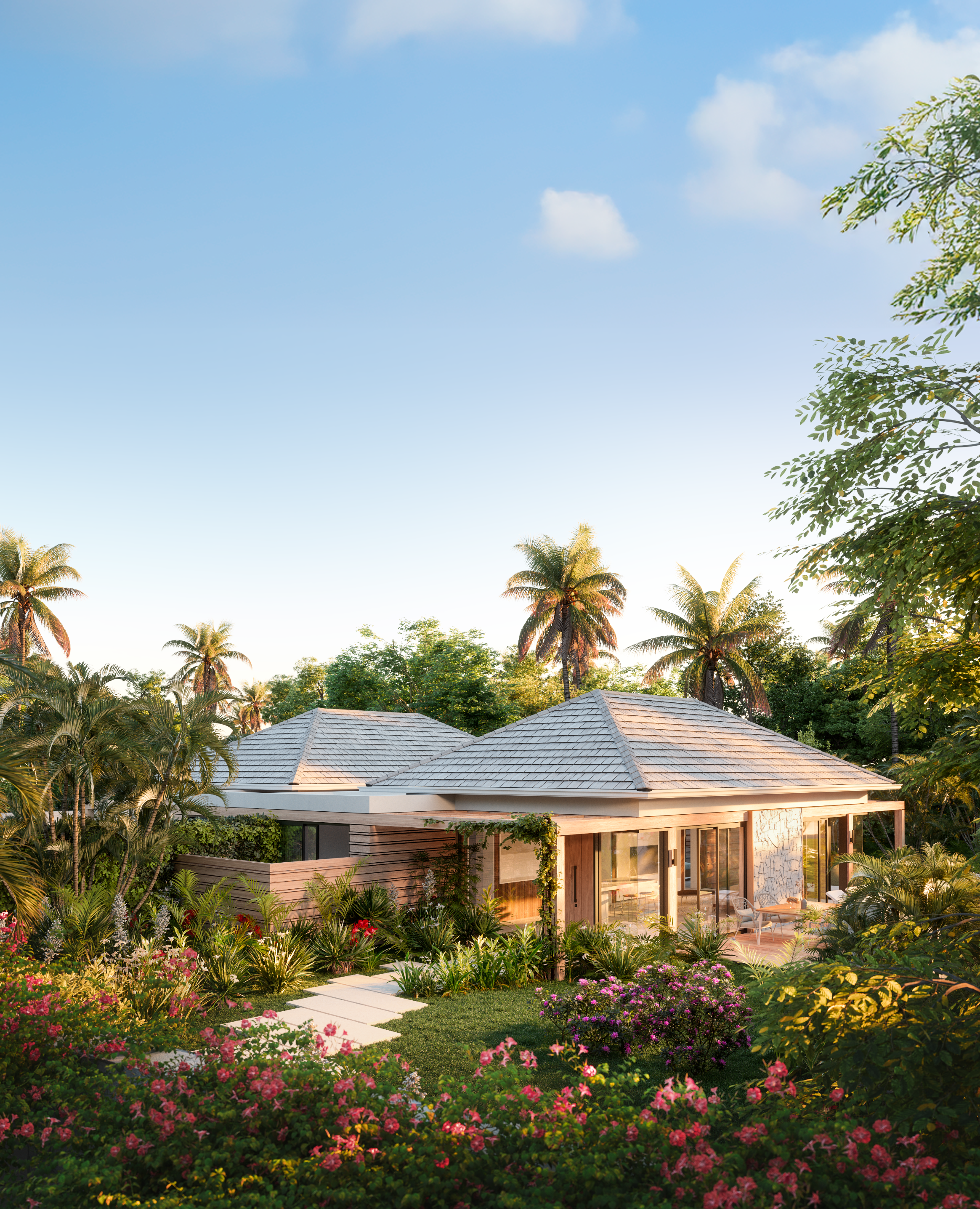
At Mayakoba, the mangroves, lagoons and extraordinary biodiversity have been central to its identity for nearly two decades. At Mandarina, low-density development and architecture integrated into the rainforest, mountains and coastline create a completely different relationship with nature.
We have never viewed nature as something that sits around the development, much less as an ESG checkbox. It is part of the experience itself. If we diminish the landscape, ultimately we diminish the destination.
The objective is quite simple: twenty or thirty years from now, the natural environment should be every bit as extraordinary as it is today, hopefully even more so.

How do low-density, master-planned destinations act as vehicles to shield ecosystems like the Sierra de Vallejo from unregulated development?
We don’t believe development and conservation necessarily have to be opposing forces. Done responsibly, development can actually become an important mechanism for long-term preservation.
Master planning gives us the opportunity to think about an entire ecosystem from the beginning: where to build, where not to build, how much density is appropriate, what areas must be protected and how the destination can evolve over decades rather than project by project.
Low density is an important part of that philosophy. At Mandarina, for example, exclusivity comes through restraint. The residences are carefully integrated into the existing landscape rather than imposed upon it.
Our responsibility is to create economic and social value from extraordinary land without destroying the very qualities that make it extraordinary. The best development should strengthen the case for preservation, not weaken it.
You host multiple competing ultra-luxury brands within single master plans. How do you maintain harmony between distinct brand identities while preserving a unified sense of place?
Our role at RLH is, in many ways, to be the curator and long-term steward of the destination. We work with some of the world’s great hospitality brands, and each should be allowed to express its own personality. A Rosewood should feel like Rosewood. A One&Only should feel like One&Only. The objective is not to homogenise them.
What connects them is the destination itself: the landscape, architecture, culture, experiences and the broader vision that RLH establishes and protects.
Mayakoba is perhaps the clearest example. Each hotel has a very distinct identity, yet the mangroves and lagoons, the golf, gastronomy, wellness, recreation and overall sense of place connect them to something larger.
We think of it almost as an orchestra. The individual instruments should sound different. Our responsibility is to make sure they are all playing the same piece of music.
How do you ensure these ultra-luxury communities feel deeply rooted in authentic Mexican heritage and environment, rather than looking like imported luxury?
Luxury loses its soul when it becomes generic or transplantable. For us, this is particularly important because we are a proudly Mexican company. We are not simply developing luxury destinations in Mexico; we are creating places that should reflect the extraordinary richness, character and diversity of our country.
That means design must begin with a deep understanding of place: its landscape, history, culture, materials and traditions. We work closely with Mexican architects, designers, artists and regional artisans so that each destination feels authentic to its surroundings, rather than like an international concept that could have been built anywhere in the world.
At Mayakoba, for example, the mangroves, lagoons and native landscape are as integral to the identity of the destination as the architecture and hospitality. Mexican cuisine, art, craftsmanship and cultural traditions deepen that sense of place and create an emotional connection that guests remember long after they leave.
Our ambition is to deliver the standards and sophistication expected of the world’s finest luxury destinations, but to do so in a way that is unmistakably Mexican. We believe that is not only a responsibility we have as a Mexican company; it is also one of our greatest competitive advantages.
Mexico doesn’t need to imitate anyone else’s definition of luxury. We can define it on our own terms.

An extraordinary destination depends on operational excellence. How do you deliver hyper-personalised service across your portfolio?
The finest service is often the service you barely notice. True luxury is not about formality or excess. It is about understanding people well enough to anticipate what they want, sometimes before they have to ask. The experience should feel intuitive, effortless and personal.
And here, we believe Mexico has an extraordinary competitive advantage. Service and hospitality are deeply rooted in our culture. From the time we are young, we are taught to welcome people into our homes, to take care of them, to make them feel comfortable and to share what we have. There is a genuine warmth and generosity in Mexican hospitality that is very difficult to teach because, at its best, it is neither scripted nor practiced. It comes naturally.
That matters enormously in luxury hospitality. You can teach standards, procedures and techniques, but genuine warmth is much harder to replicate. When exceptional professional training is combined with that instinctive desire to make people feel welcome and cared for, the result can be extraordinarily powerful. We believe this is one of Mexico’s great advantages as a luxury destination, and one that is very difficult to reproduce elsewhere.
Our hospitality partners bring extraordinary expertise and their own service philosophies, while our people bring something equally important: an authentic culture of hospitality. RLH’s role is to ensure that the entire destination works cohesively so that an owner or guest feels that same sense of care throughout their experience.
Ultimately, people may admire the architecture and remember the view, but what creates an emotional connection is how a place makes them feel. And more often than not, that comes down to people genuinely taking care of people.
Looking 20 to 30 years ahead, what will define the ultimate success of RLH Properties’ landmark communities?
We think in generations. Buildings can be built relatively quickly. Great destinations take decades to mature. Our responsibility is therefore to think well beyond the next hotel opening or residential sale and ask what these places should become over twenty, thirty or even fifty years.
Mayakoba established a global benchmark for how world-class hospitality, residences, nature, wellness, gastronomy and sport can coexist within one integrated destination. Our responsibility now is to continue evolving that model across the RLH portfolio through disciplined investment, exceptional partners and experiences that create enduring value while protecting the landscapes and sense of place that make each destination unique.
For us, the ultimate measure of success is whether these places become more valuable with time in every sense: emotionally, environmentally and financially.
If decades from now the ecosystems of Mayakoba and Mandarina are even more vibrant than they are today, and if the grandchildren of our original homeowners are still choosing to return and create their own family memories there, then we will have accomplished something truly worthwhile.
We will not simply have built extraordinary destinations. We will have created places worth passing from one generation to the next.
Images: RLH Properties