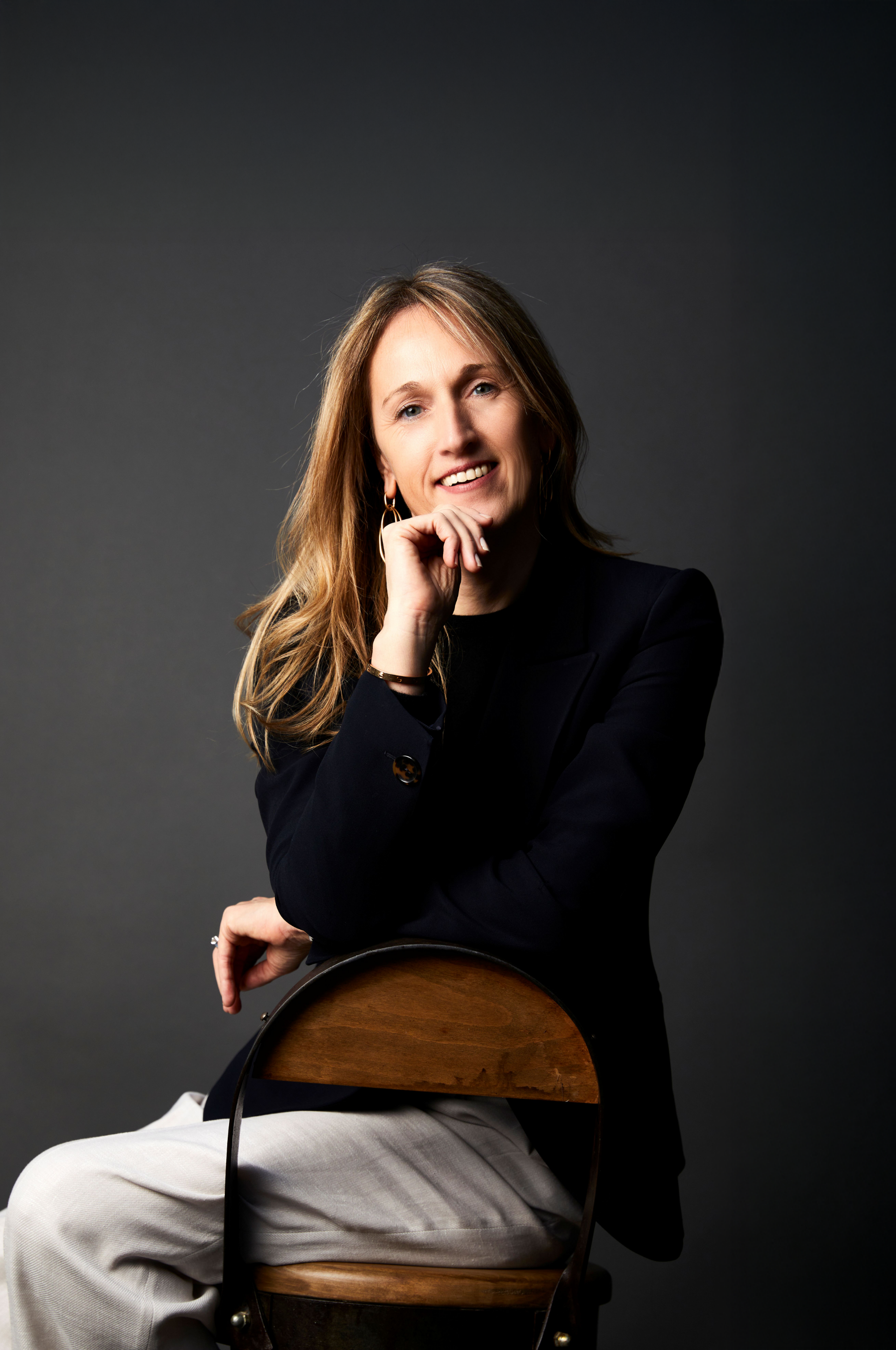
As lifestyle amenities and branded residences reshape GCC real estate, Marloes Knippenberg, CEO of Kerten Hospitality, reveals why the secret to long-term investor ROI lies not in square footage or flashy gimmicks, but in building places where people truly belong.
The GCC real estate landscape is undergoing a fundamental shift. Across Dubai, Riyadh, and emerging regional hubs, the benchmark for premium property has moved far beyond prime addresses and glass façades. Today’s buyers and tenants are demanding connection, community, and curated living – turning lifestyle hospitality and branded residences into the region’s most competitive asset class.
Yet, as new supply hits the market, a critical question emerges for property buyers: How do these elevated lifestyle promises translate into resilient, long-term financial returns? In this exclusive interview, Marloes Knippenberg shares her insights on moving from transactional hospitality to authentic belonging, what amenities actually add value to a property, and what investors must look for to future-proof their capital in the Gulf’s evolving property landscape.

Hospitality is shifting from transactional stays to emotional connection. In a residential context, what actually turns a property into a place of “belonging,” and how do lifestyle amenities drive that shift?
For me, belonging starts with participation, not amenities alone. Hospitality is shifting from a product into a platform, and residential developments follow the same logic: people commit to places where they can live, work, socialise and pursue wellbeing. What turns that into belonging is community, embedded through shared programming, cultural collaborations and social spaces. That emotional connection is also commercial, driving the loyalty and repeat demand that underpin long-term value.
Padel courts, private cinemas, and artisan coffee bars look great in sales brochures, but not all of them get used. How do you design an amenity ecosystem, combining wellness, F&B, and social spaces, that actually transforms a building into a neighbourhood?
The mistake is treating amenities as a checklist rather than a system. Putting a hotel, retail and residences on one plot does not create synergy by itself. Value appears when wellness, F&B and social spaces are designed to feed one another: the hotel drives footfall into the restaurants, residents provide year-round daily spend, and public spaces earn their keep through events and programming. Designed that way, the development becomes a neighbourhood anchor rather than a cluster of underused facilities.
How must branded residences and lifestyle developments evolve their physical spaces and services to cater to the hybrid, hyper-mobile global resident?
Spaces have to be built for fluidity. The lines between short-stay guest, long-stay resident, business traveller and local are dissolving, so a development has to accommodate all of them at once. This is where branded residences fit the hyper-mobile buyer, supporting short or long stays, personal use, rental or resale from one asset. On the service side, it means adaptable F&B and hybrid ownership models that blend real estate and hospitality.
Modern buyers increasingly reject cookie-cutter luxury. How can lifestyle developments weave local culture and regional heritage into their design and operations to give a project a distinct “soul”?
Soul comes from designing outward from a place, not importing a template. Developments with a strong sense of place and local narrative woven into their identity resonate more deeply and stand apart in a crowded market. Our own Dar Tantora The House Hotel in AlUla is a case in point: rather than a pre-set concept, it was shaped by the site’s history, restored from centuries-old mud-brick houses, with candlelit pathways and local rituals. The same discipline gives a residential scheme a character competitors cannot simply replicate down the road.
Developments with a strong sense of place and local narrative woven into their identity resonate more deeply and stand apart in a crowded market.
Facility management typically focuses on keeping the lights on. What does true hospitality-led property management look like, and how does it keep a residential community vibrant years after handover?
Traditional facilities management keeps a building running; what sustains a residential community is active engagement: programming, cultural partnerships and evolving experiences that give people a reason to keep showing up. What the industry once called community building becomes ongoing community management, with the offer extending beyond living and dining into wellbeing, longevity, retail and art. That stewardship keeps a scheme vibrant, and its value intact, years after handover.
As an investor purchasing GCC real estate today, what specific elements protect long-term capital growth and rental yields?
The clearest protection sits in the brand and service layer. Branded residences command premiums of 20-35 per cent over non-branded stock and hold rental demand more consistently, which protects yield. In Ras Al Khaimah, close to 40 per cent of new residential supply by 2029 is expected to be branded, at premiums above 50 per cent versus unbranded alternatives. Beyond the brand, mixed-use developments have proved more resilient than single-use assets, continuing to generate returns long after the launch phase, when single-use schemes often plateau.


Branded residences can command significant price premiums. Beyond attaching a famous name to a façade, what operational capabilities must an operator deliver to justify that premium to tenants and buyers?
The premium is justified by what the operator delivers daily, not the name over the door. Demand is driven by a preference for fully serviced, turnkey homes, so as operators we have to run genuine hospitality-grade service. Underpinning that is an operational backbone of integrated management systems that improve staffing efficiency, predictive maintenance and energy optimisation. These are no longer a cost centre, but part of the investment case that turns a trusted name into an asset that performs.
Real estate traditionally prioritises “location, location, location.” Why do integrated, mixed-use micro-ecosystems perform well when it comes to secondary market resale value?
Location, on its own, no longer explains resale performance. A prime address in a poorly conceived scheme can trade below a well-run destination elsewhere. What sustains resale value is durable demand, and that comes from being a place people actively choose to return to rather than pass through. Integrated, mixed-use schemes are conceived as destinations, not standalone buildings dropped onto a plot. Their programming and mix of uses keep them relevant, so they mature into self-sustaining assets that tend to outperform single-use stock on resale.
With significant supply entering key GCC markets, what single non-negotiable criteria should a buyer insist on to ensure their unit stands out and maintains high occupancy during different cycles?
If it has to be one thing: adaptability. With significant new supply entering GCC markets, the schemes that hold occupancy across cycles are those built to evolve rather than stand still. A development that can adjust its mix of uses and reposition space as demand shifts is far better placed to weather volatility than a fixed, single-purpose asset. The question for a buyer is not whether a unit performs today, but whether the development around it is built to keep performing a decade from now.

Images: Kerten Hospitality
Read more of our conversations here.